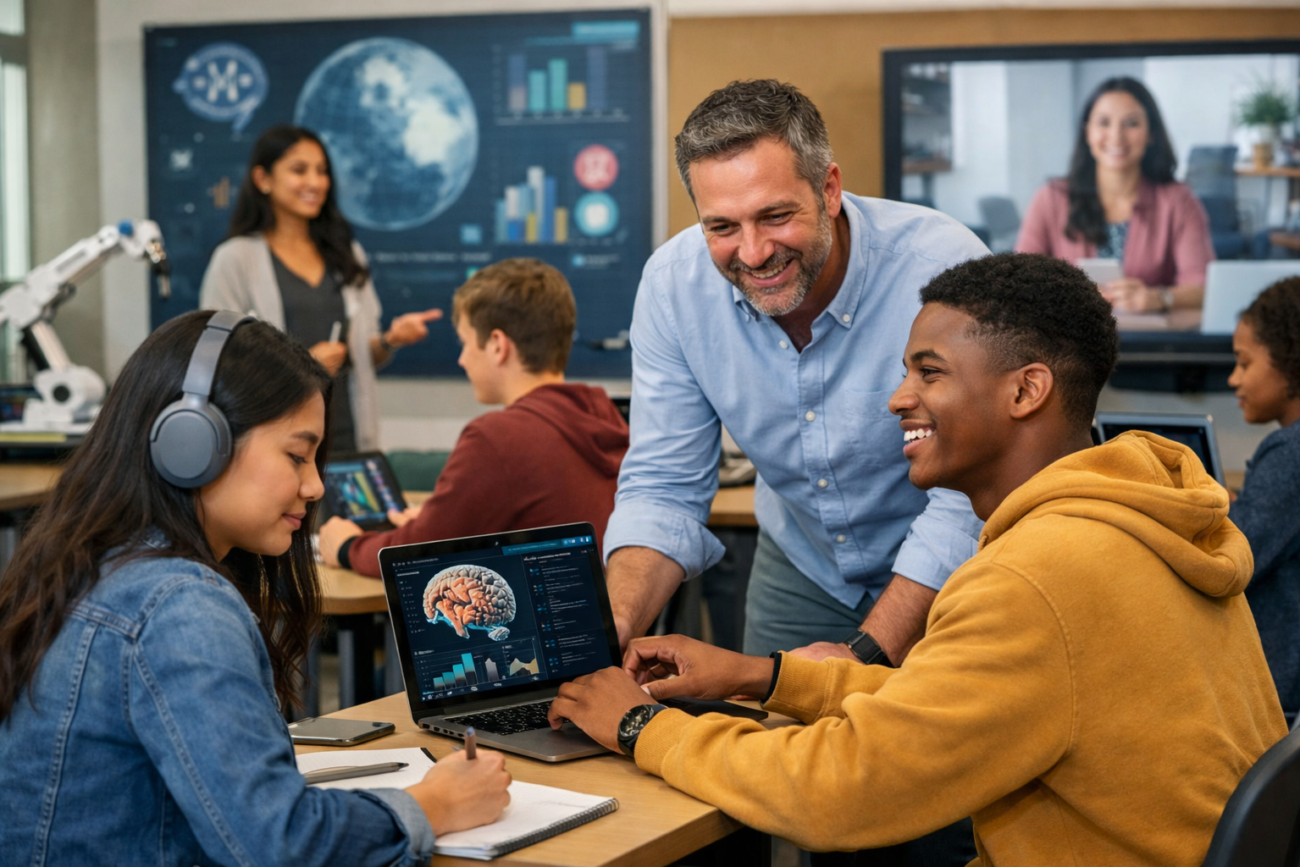
Education today is undergoing rapid transformation, shaped by technology, new learning models, and evolving skill demands. Classrooms are no longer limited to four walls, textbooks, and blackboards. Digital platforms, interactive tools, and global connectivity are redefining how students learn and teachers teach. This shift is creating opportunities for personalized learning experiences that were difficult to imagine a decade ago.
One of the most noticeable changes is the rise of blended and online learning. Students now combine traditional classroom teaching with virtual lessons, recorded lectures, and online assessments. This flexibility allows learners to study at their own pace and revisit complex topics whenever needed. For many working professionals and remote learners, online education has become a practical pathway to continue studies without relocating or leaving jobs.
Another major trend is the integration of technology such as artificial intelligence, educational apps, and virtual labs. These tools help create interactive content, instant feedback systems, and adaptive learning modules that adjust to a student’s strengths and weaknesses. Technology is not replacing teachers, but rather supporting them by reducing routine tasks and allowing more focus on creativity and mentorship.
Modern education is also shifting focus from rote memorization to skill-based learning. Critical thinking, problem-solving, communication, and digital literacy are becoming as important as academic knowledge. Schools and colleges are increasingly encouraging project work, internships, and real-world applications that prepare students for future careers instead of just exams.
There is also growing emphasis on mental health and holistic development in education. Institutions are recognizing that academic achievement alone is not enough; emotional well-being, confidence, and social skills matter just as much. Counseling services, mindfulness activities, and supportive classroom environments are slowly becoming integral parts of the education system.
At the same time, challenges remain. Not every student has equal access to devices, internet connectivity, or supportive learning environments at home. The digital divide continues to affect rural and economically weaker sections. Addressing affordability, access, and teacher training will be essential to ensure that progress in education benefits everyone, not just a few.
Overall, the future of education looks dynamic and student-centered. With continuous innovation, global collaboration, and a strong focus on skills and well-being, modern education is moving toward creating lifelong learners. The coming years are likely to bring even more meaningful changes, helping students not only earn degrees, but also adapt, grow, and succeed in a fast-changing world.
