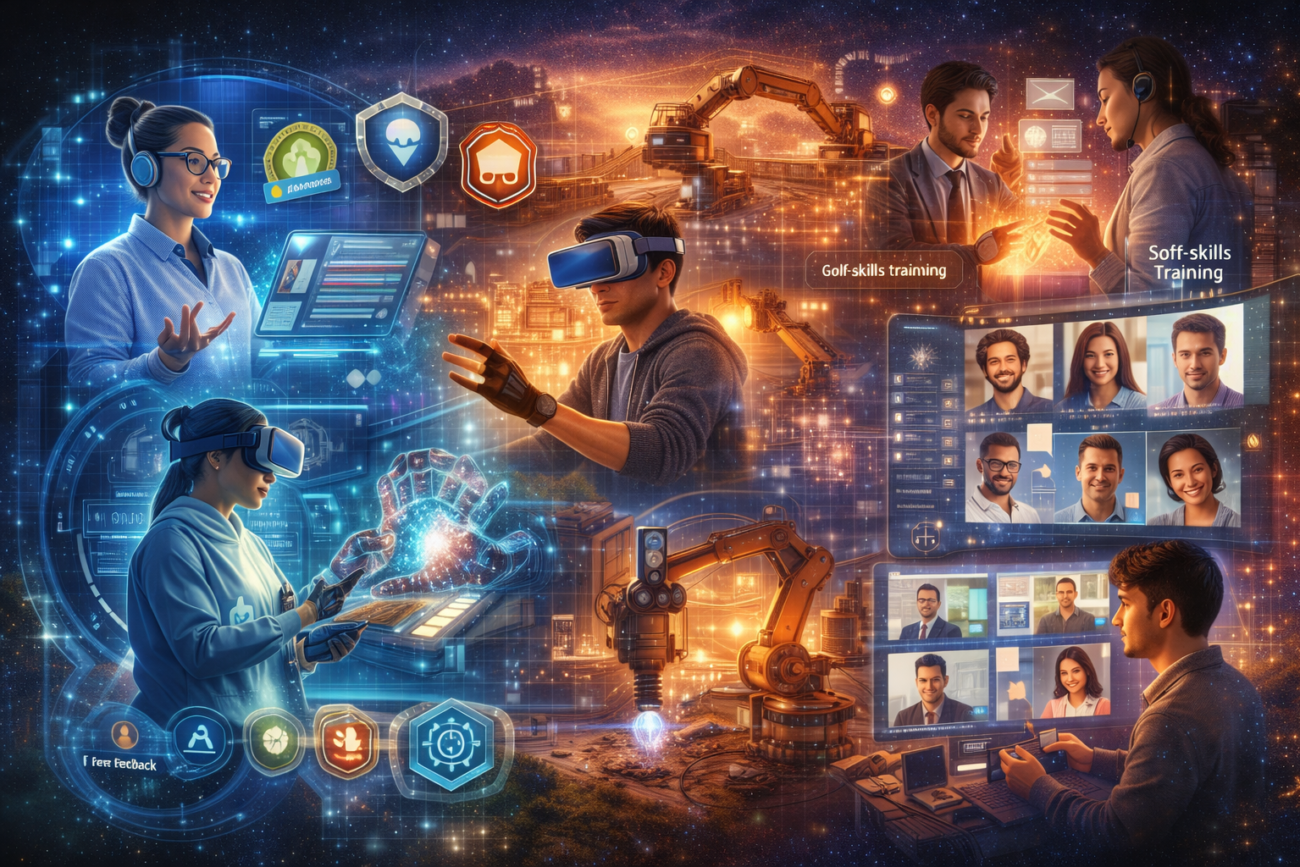
Skill development in 2026 has evolved into a continuous, AI-orchestrated journey where personalized learning paths replace traditional classroom models, adapting in real-time to individual career goals and market demands. Platforms leverage advanced analytics to assess current competencies, predict future skill gaps, and curate micro-credentials that stack into comprehensive professional profiles. This shift empowers workers across industries to upskill efficiently without disrupting their careers.
Generative AI tutors provide 24/7 coaching, simulating real-world scenarios through conversational interfaces that evolve with user proficiency. These virtual mentors analyze speech patterns, decision-making speed, and knowledge retention to deliver targeted feedback, accelerating mastery in areas like data science, cybersecurity, and sustainable engineering. Early implementations show learners achieving 3x faster proficiency compared to conventional training methods.
Immersive VR/AR environments dominate hands-on skill acquisition, allowing trainees to practice complex procedures—from surgical techniques to heavy machinery operation—in risk-free digital twins of actual workplaces. Integrated haptic feedback and AI-driven difficulty scaling ensure muscle memory development matches cognitive learning. Industries such as manufacturing and healthcare report 40% reductions in onboarding time through these simulations.
Soft skills development sees equal innovation, with AI-powered emotional intelligence platforms using facial recognition and voice sentiment analysis to train empathy, negotiation, and leadership in live role-play sessions. Participants receive granular performance metrics and personalized growth plans, bridging the gap between technical expertise and interpersonal effectiveness that employers increasingly prioritize.
Corporate learning ecosystems integrate blockchain-verified digital badges, creating portable skill passports that showcase verified achievements across job platforms and internal mobility programs. This transparency fosters internal talent marketplaces where employees bid on projects matching their evolving competencies. Organizations adopting these systems experience 25% higher retention rates among high-potential talent.
Global collaboration platforms connect learners worldwide for peer-to-peer skill exchange, powered by real-time translation and cultural adaptation AI. Professionals from emerging markets access mentorship from industry leaders in Silicon Valley or Singapore without geographical barriers. This democratization particularly benefits regions like India, where Tier-2 city youth gain exposure to global best practices.
Hybrid human-AI certification bodies ensure skill credentials maintain rigor while scaling assessment volume. Proctorless exams use behavioral biometrics to verify identity and detect cheating, while AI graders provide instant, consistent evaluations of project-based demonstrations. As automation displaces routine tasks, these mechanisms position skill development as the primary currency of career longevity and economic mobility.
